
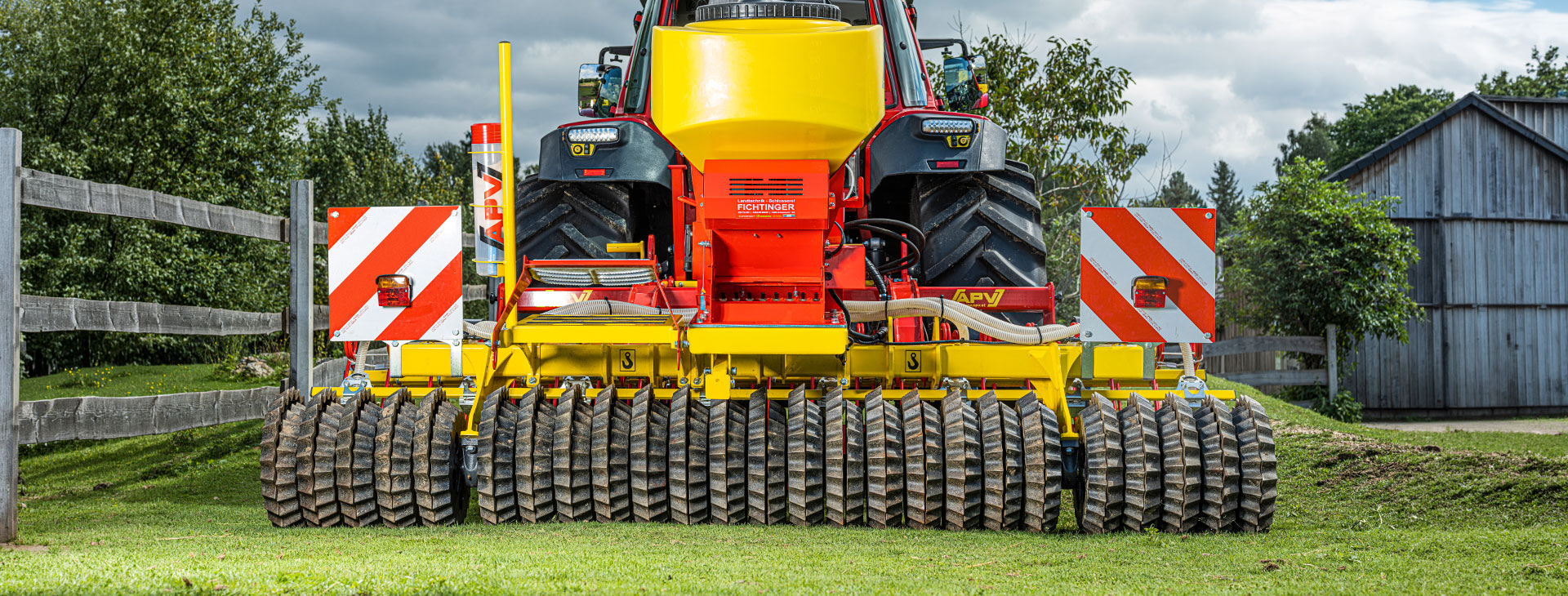
TARGETED GRASSLAND RECONSOLIDATION.
SUSTAINABLY STRENGTHEN SWARDS.
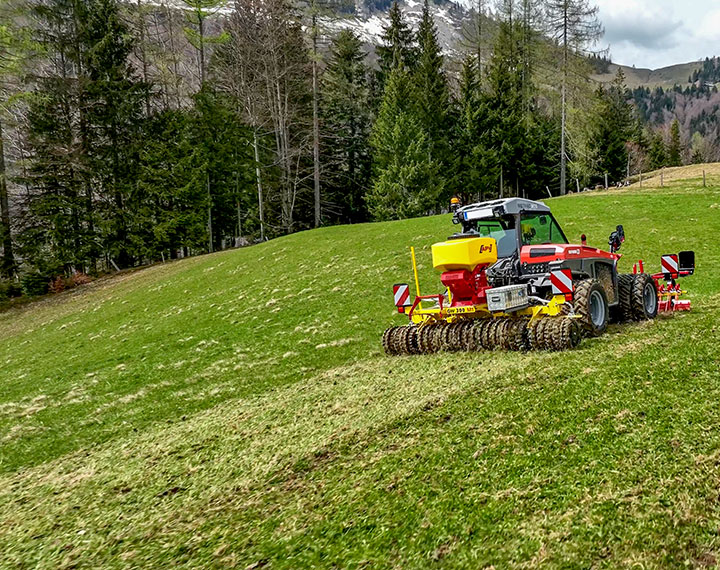
Improve the seed-to-soil contact of your grassland swards and create optimal conditions for uniform plant growth. With the APV Grassland Roller, you press down frost-heaved stones and uneven ground, promoting contact between the soil and the sward. In combination with reseeding, you support the germination and development of new forage grasses – for a dense, high-performing grassland sward.
Securely reconsolidate seeds
and support seed emergence with APV grassland rollers.
The APV Grassland Roller (GW) creates the necessary seed-to-soil contact after reseeding, new seeding, and soil tillage. The roller rings press the seeds into the soil, close cavities, and thus improve the conditions for uniform germination.
Depending on the soil, application, and desired reconsolidation, different roller types are available: Cambridge Rollers for a crumbly seedbed structure and Toothed Rollers for more intensive cultivation and reconsolidation.
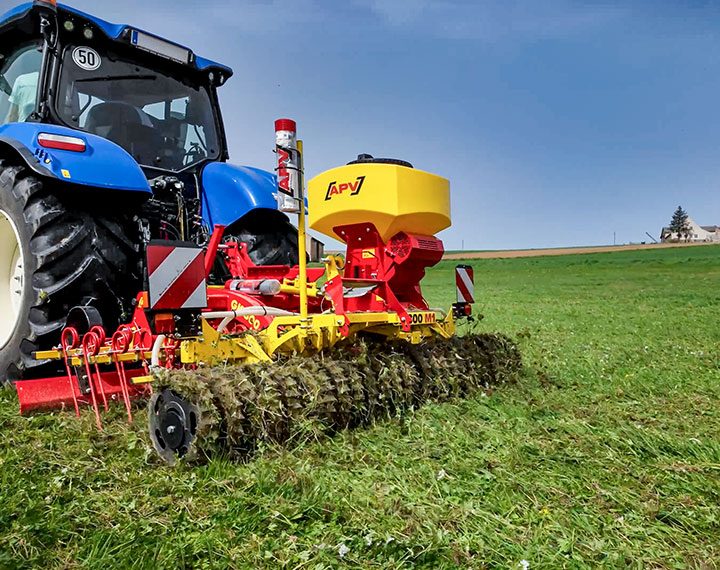
In combination with an APV front-mounted weeder and a Pneumatic Seeder or Multi-Metering System, a versatile solution for grassland care, reseeding, and arable farming is created.
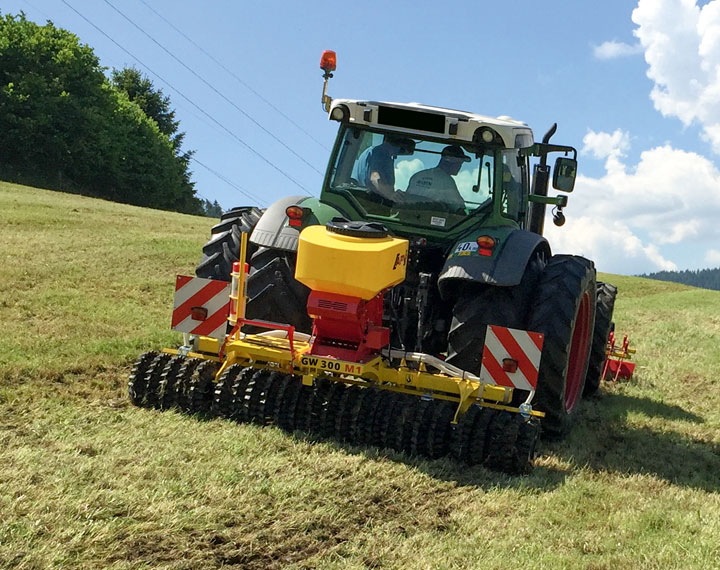
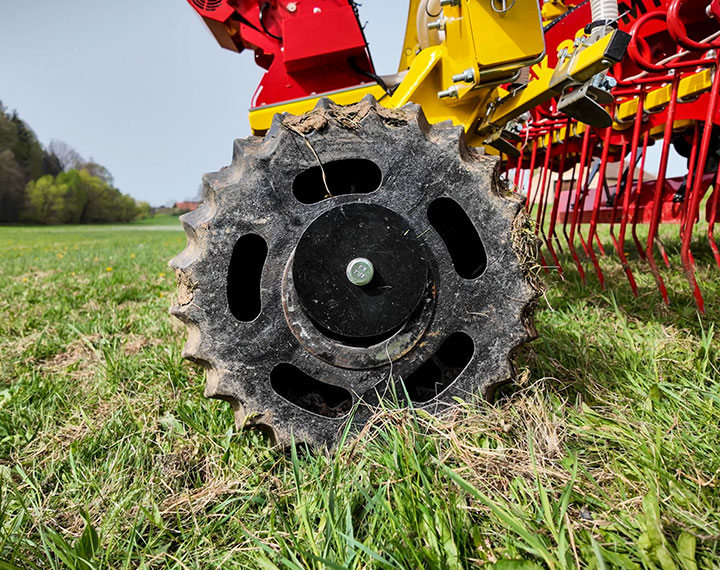
Targeted improvement of seed-to-soil contact
The roller presses the seeds into the soil, closes cavities, and thereby supports uniform water supply and germination.
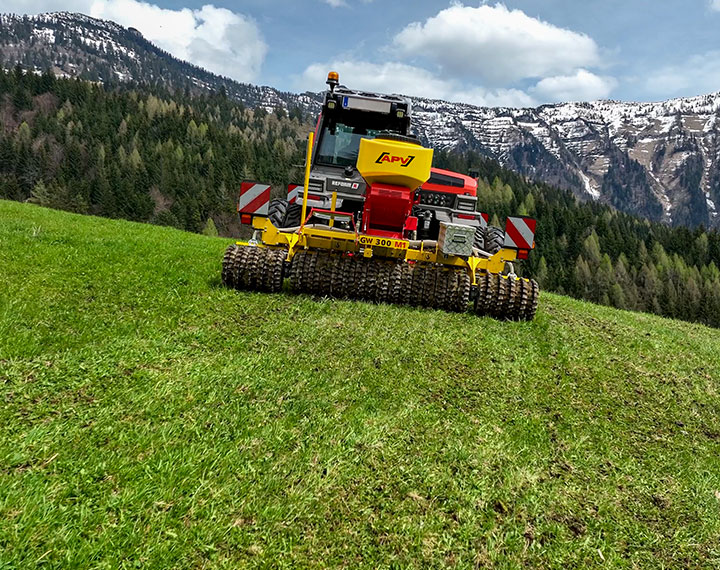
Optimal soil reconsolidation
Flexible roller rings adapt to the ground and ensure uniform reconsolidation across the entire working width.
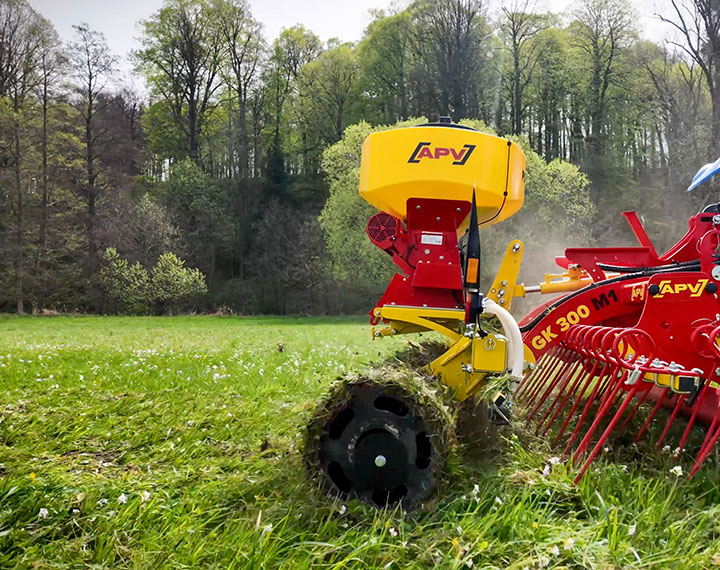
Combine sowing and rolling
With an APV seeder, you apply seeds and immediately press them down with the roller – efficiently in one pass.
Advantages of the APV Grassland Roller
The Principle
For reseeding or new seeding, the seeds are evenly distributed close to the ground via the mounted seeder. Application takes place before the roller. Subsequently, the roller rings press the seeds onto the soil surface.
This closes cavities and improves contact between seeds and moist soil. Reconsolidation supports water conduction to the seed and creates more favorable conditions for uniform field emergence.
Without a mounted seeder, the Grassland Roller (GW) can be used for pure reconsolidation, clod crushing, and seedbed preparation.
In complete APV grassland systems such as the Grassland Combi (GK) and the Grassland Pro Harrow (GP), the grassland roller is installed as standard.
Why is seed-to-soil contact so important?
Seeds require moisture, warmth, and oxygen to germinate reliably. Without sufficient contact with the soil, the seed can only absorb existing moisture to a limited extent.
The Grassland Roller (GW) specifically presses the seeds into the soil. This:
- closes cavities,
- improves contact with moist soil,
- reduces the drying speed of the seedbed,
- allows seeds to germinate more uniformly,
- supports a more homogeneous sward.
Especially for small grass seeds and legumes, good seed-to-soil contact is crucial because these seeds are only sown shallowly.
You are currently viewing a placeholder content from YouTube. To access the actual content, click the button below. Please note that doing so will share data with third-party providers.
More Information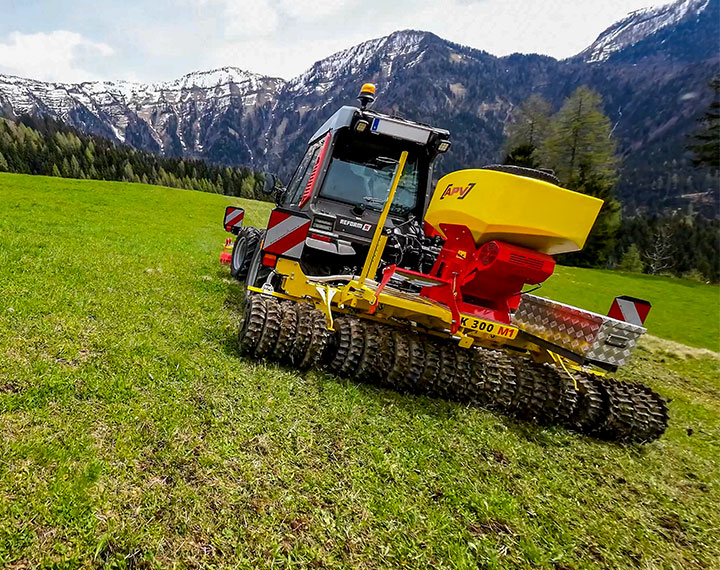
Advantages of the APV Grassland Roller
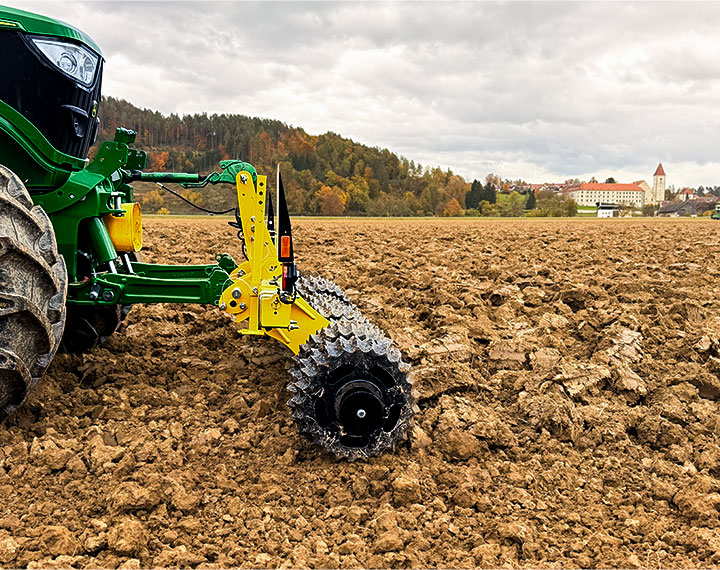
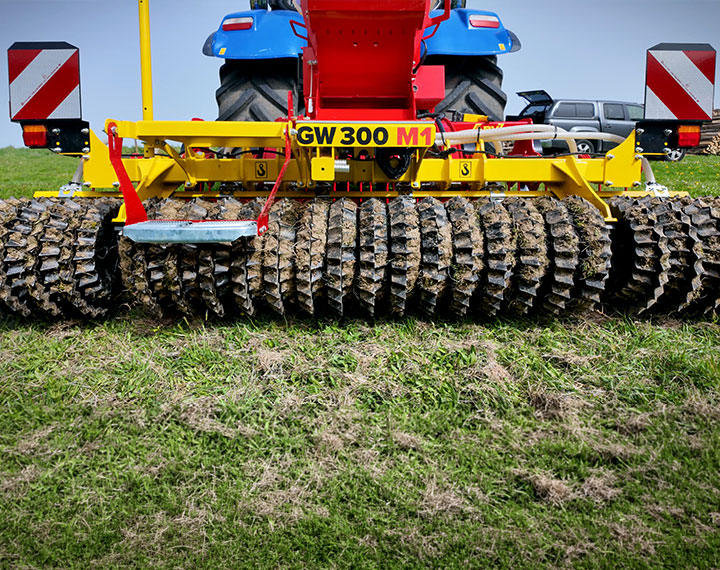
The APV Grassland Roller (GW) is a versatile implement for professional grassland and arable farms. It reconsolidates the soil, crushes clods, and creates a uniform seedbed structure.
Thanks to its flexible roller rings, the machine adapts to uneven ground. This distributes pressure across the working width and ensures uniform soil cultivation.
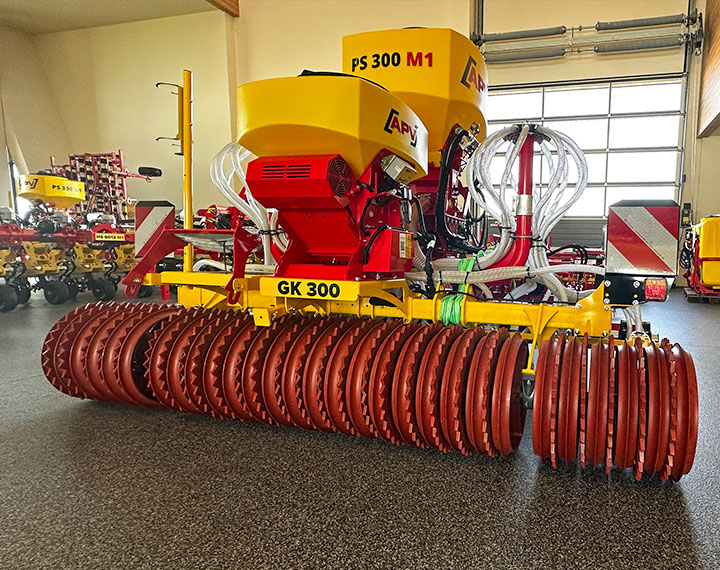
With a mounted APV Pneumatic Seeder or Multi-Metering System, seeds can be applied directly in front of the roller. The trailing roller immediately presses the seeds down afterwards.
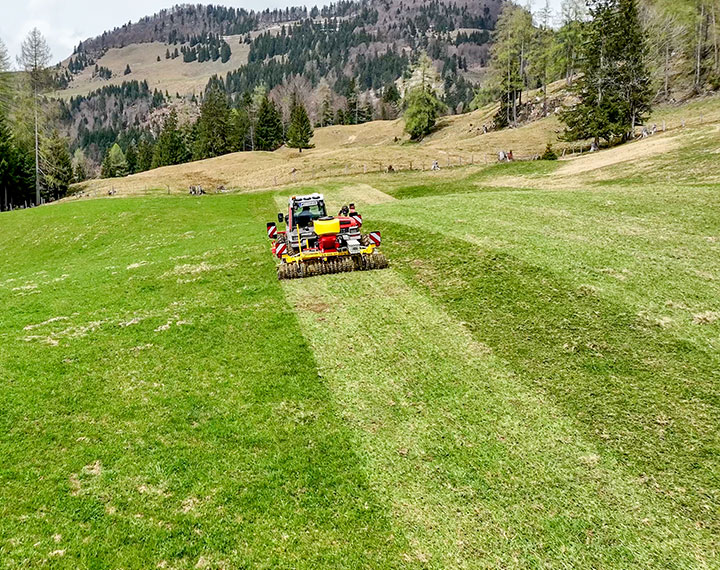
At APV, you get different roller types or roller varieties for your individual application area. The suitable roller depends on soil type, moisture, desired reconsolidation, and tractor power. We are happy to advise you on the optimal roller type – click here.
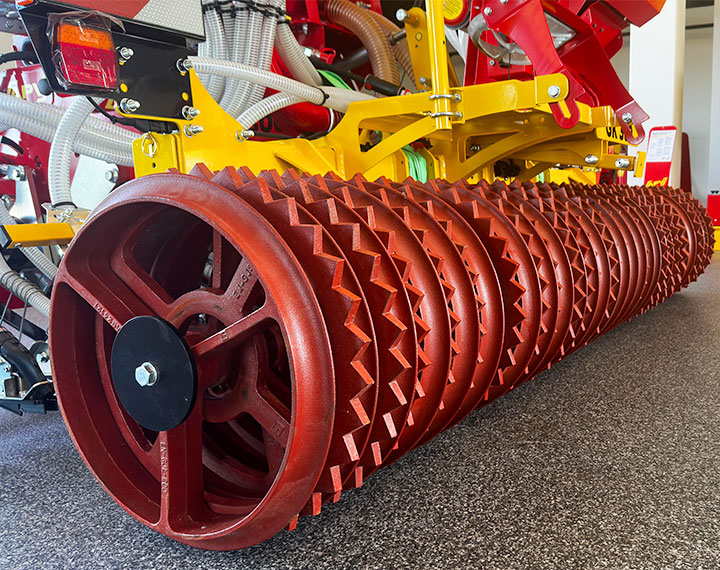
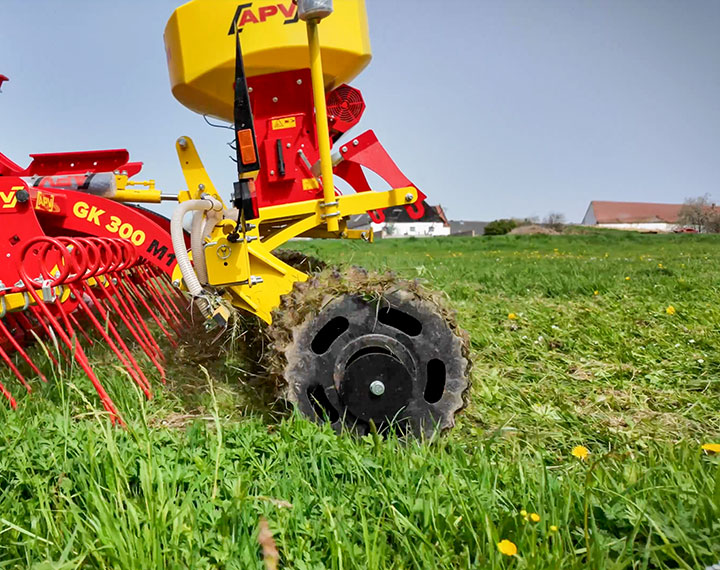
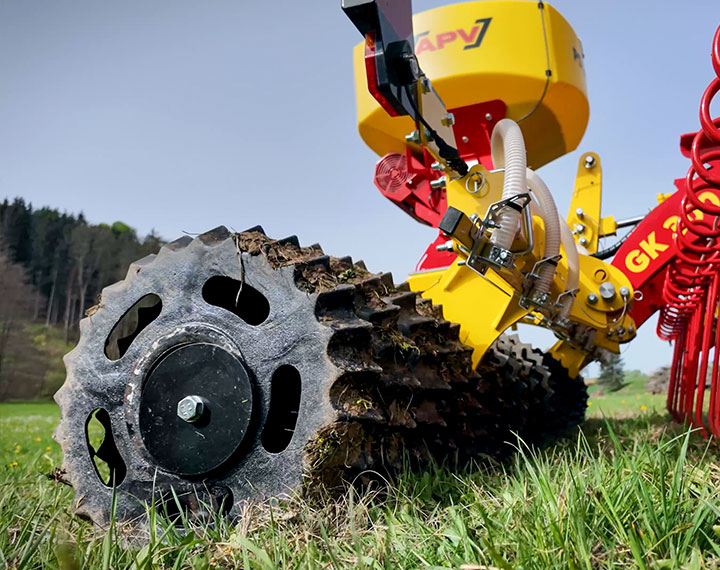
Toothed Roller
The Toothed Roller works more intensively in the soil surface. Its tooth shape supports the crushing of clods and creates a structured, crumbly surface.
Advantages of the Toothed Roller:
Choose the Toothed Roller if...
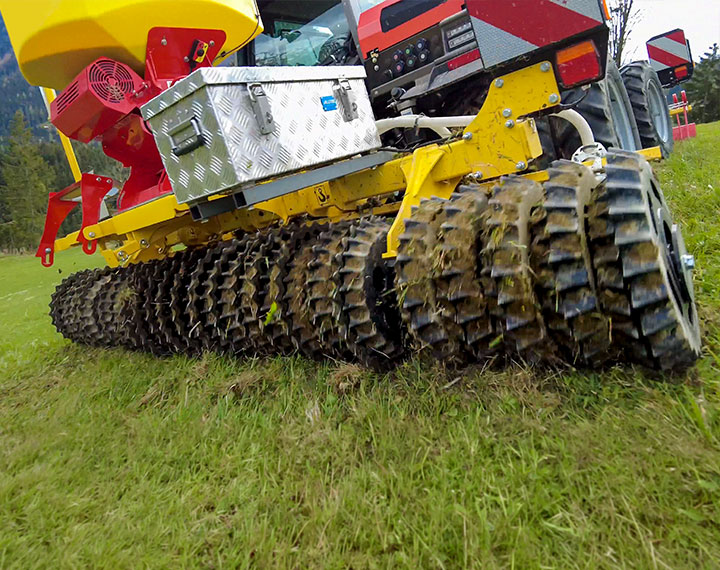
Cambridge Roller
The Cambridge Roller with a 390 mm diameter is the lighter variant. It is suitable for farms seeking reliable reconsolidation with lower machine weight. The larger Cambridge Roller offers more intensive reconsolidation due to its higher weight.
Currently, the Cambridge Roller is available from APV in diameters of Ø 390 mm and Ø 530 mm.
Your advantages:
Choose the Cambridge Roller if...
At APV, you get different roller types or roller varieties for your individual application area. The suitable roller depends on soil type, moisture, desired reconsolidation, and tractor power. We are happy to advise you on the optimal roller type – click here.
Areas of application for the APV Grassland Roller
The grassland roller, either as a combination with your fleet or as part of our grassland systems like the Grassland Combi (GK) and the Grassland Pro Harrow (GP), is perfect for reseeding and new seeding in grassland as well as arable farming. Whether dairy farms, pasture farms, organic farms, or conventional grassland or arable farms – all can benefit from the APV Grassland Roller.
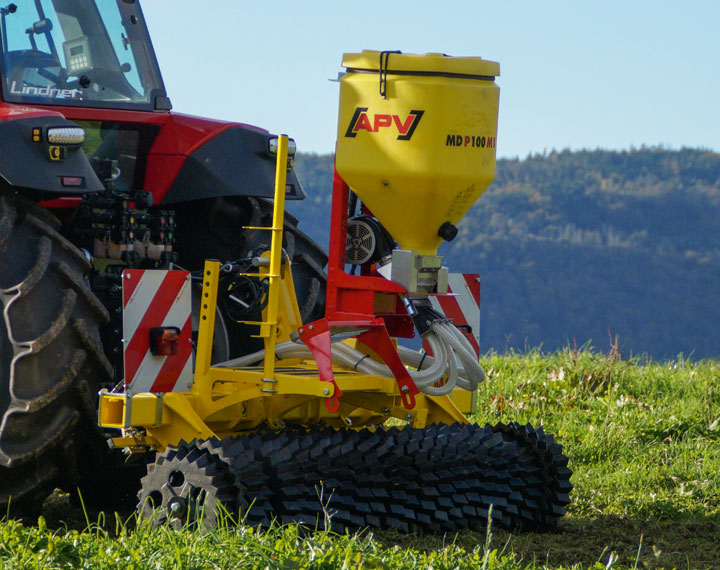
Modelle
GW 250
Compact, versatile, and upgradeable
The APV Grassland Roller (GW) 250 offers a working width of 2.4 m. It is a compact solution for grassland and arable farms, smaller areas, slopes, and tractors with limited lifting capacity.
Depending on the application, the Grassland Roller (GW) 250 is available with Cambridge or Toothed Rollers. Optionally, a Pneumatic Seeder or a Multi-Metering System can be mounted.
You can find all technical details and information on the scope of delivery in the brochure in the Downloads section, or click here.
GW 300
The powerful all-rounder
The APV Grassland Roller (GW) 300 offers a 3 m working width and is suitable for farms that want to combine higher area output with reliable reconsolidation.
It is also available with different Cambridge or Toothed Rollers and can be combined with APV seeding technology and a front-mounted weeder.
You can find all technical details and information on the scope of delivery in the brochure in the Downloads section, or click here.
GW 400
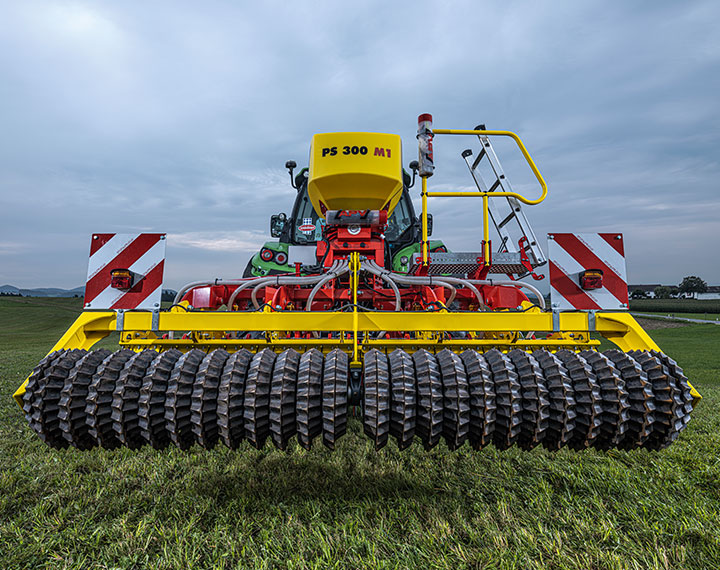
More working width for efficient reconsolidation
The APV Grassland Roller (GW) 400 offers a working width of 4 m. It is a compact solution for grassland and arable farms, larger areas, and slopes.
Depending on the application, the grassland roller is available with Cambridge or Toothed Rollers. Optionally, a Pneumatic Seeder or a Multi-Metering System can be mounted.
You can find all technical details and information on the scope of delivery in the brochure in the Downloads section, or click here.
Which model fits?
The Grassland Roller (GW) 250 is the more compact and lighter solution. The Grassland Roller (GW) 300 offers more working width and area output. Thanks to the common frame, a Grassland Roller (GW) 250 can later be extended to a 3 m working width.
Do you want to reseed grassland, reconsolidate a seedbed, or use a combined solution with a front-mounted weeder and APV seeder?
Our team will assist you in selecting the right Grassland Roller (GW), the correct roller type, and a suitable combination for your farm.
Accessories
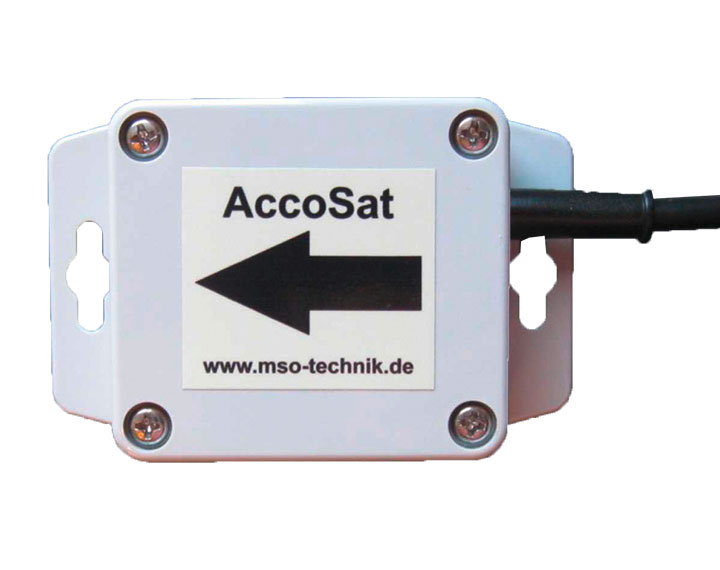
The GPSa sensor transmits the current vehicle speed to the control box.
GPSa Sensor

Cable sets, extension cables, 7-pin signal cable, hoses, hose extensions, ...
Miscellaneous cable and hose accessories
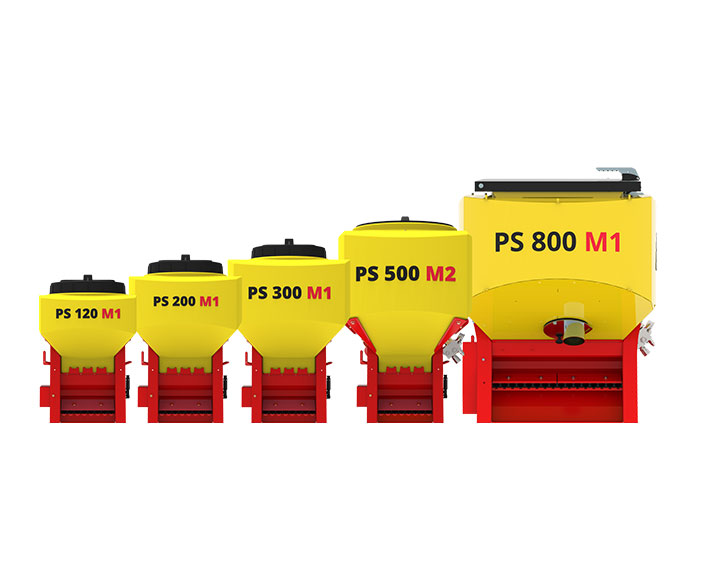
Superstructure of a PS-row Pneumatic Seeder with electric or hydraulic fan + Filling Ladder
Pneumatic Seeder
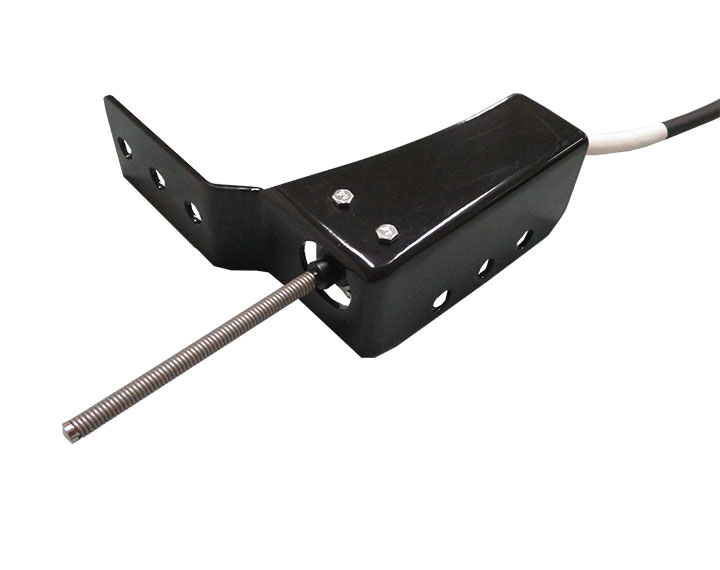
Mechanical actuation of a sensing spring. This automatically starts or stops the seeder's seeding shaft (reversible).
Top Link Sensor
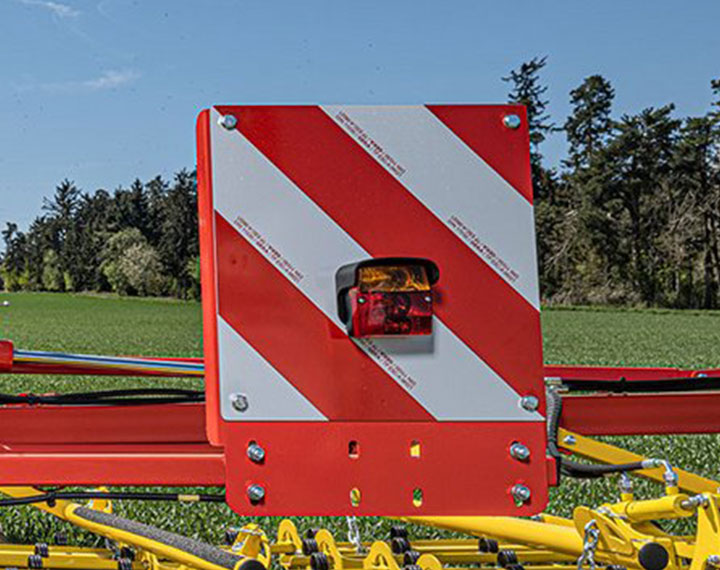
For safe travel on public roads.
Symbol photo
Warning signs + lighting
Downloads
Technical data are important – but the right configuration is decided in practical use.
Our team supports you in selecting the optimal product configuration for your desired work result.
Do you already know the APV Grassland Guide?
The APV Grassland Guide is a practical reference work for successful grassland care and management. You will learn how to identify gaps in the sward and problem grasses and how to promote a dense, high-performing sward and high-quality basic fodder with targeted care, reseeding, or new seeding. Additionally, you will receive valuable tips on grassland technology and important forage grasses.
We will be happy to advise you
personal | fast | straightforward
Do you still have unanswered questions or would you like individual advice from one of our APV product specialists? Please use the form below and we will get back to you promptly. We look forward to speaking with you. See you soon.
Medien
Bilder
Videos
Videos
You are currently viewing a placeholder content from YouTube. To access the actual content, click the button below. Please note that doing so will share data with third-party providers.
More InformationYou are currently viewing a placeholder content from YouTube. To access the actual content, click the button below. Please note that doing so will share data with third-party providers.
More InformationYou are currently viewing a placeholder content from YouTube. To access the actual content, click the button below. Please note that doing so will share data with third-party providers.
More InformationFAQ
What is a grassland roller used for?
The APV Grassland Roller (GW) is used for the care of meadows, pastures, and forage areas. It levels uneven ground, presses down frost-heaved swards, and establishes seed-to-soil contact. In conjunction with reseeding, rolling also improves contact between seeds and soil.
Why is rolling important after grassland reseeding?
After reseeding, the APV Grassland Roller supports the seed-to-soil contact of the applied seeds. Improved contact between seeds and soil can promote water absorption and germination conditions – an important prerequisite for the successful establishment of reseeded grasses.
When should grassland be rolled?
Rolling is particularly useful when uneven ground needs to be leveled, frost-heaved swards need to be pressed down, or reseeding needs to be completed. The appropriate time depends on soil moisture, trafficability, and the condition of the sward. Overly wet soils should not be unnecessarily stressed or compacted.
Can the APV Grassland Roller be combined with reseeding?
Yes. The grassland roller can be part of a combined care and reseeding process. After sowing, the roller ensures crucial seed-to-soil contact, thereby creating favorable conditions for the germination and establishment of the applied grasses.
Which roller types are available for the APV Grassland Roller?
Depending on the model and desired application, different roller types are available. This allows the grassland roller to be adapted to various soil conditions and requirements in grassland care.
Why is a level grassland surface important?
Unevenness can impair subsequent work processes and forage harvesting. A level surface facilitates management and can help reduce contamination of the harvested material by soil.
Can a grassland roller press down frost-heaved swards?
Yes. Due to frost and changing soil conditions, plants or parts of the sward can lose the necessary seed-to-soil contact. The APV Grassland Roller can press the sward back into the soil, thereby improving contact between roots and soil.
Which farms are suitable for the APV Grassland Roller?
The grassland roller is particularly suitable for grassland and dairy farms, as well as farms with forage areas, that regularly maintain their swards, level uneven ground, or want to complete reseeding measures by rolling.
Das Problem
Successful seed emergence depends not only on seeds, weather, and seeding rate. The direct contact between seed and soil is also crucial. If seeds lie in cavities or too loosely on the surface, they can utilize existing soil moisture less effectively.
Especially for grassland reseeding and new seeding, uniform reconsolidation is therefore important. At the same time, the soil should not be smeared or unnecessarily compacted.
Die Lösung
The APV Grassland Roller (GW) combines reconsolidation, seedbed preparation, and flexible combination options. It can be used in grassland as well as in arable farming and supports uniform seed emergence through improved seed-to-soil contact.
Technical data are important – but the right configuration is decided in practical use.
Our team supports you with all important questions regarding your personal needs and requirements for APV agricultural machinery.